
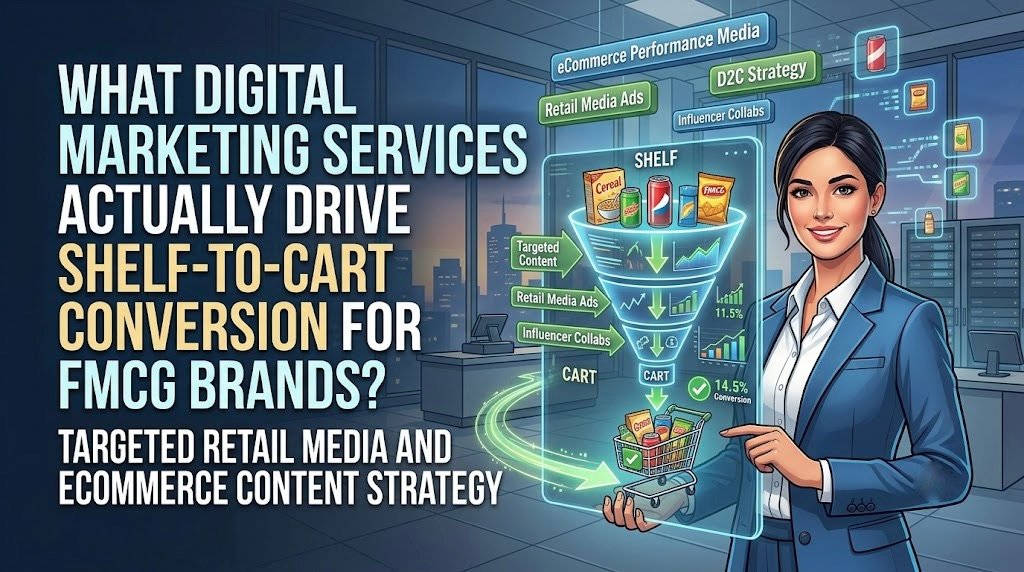
Shelf-to-cart conversion is the movement from product discovery to purchase, whether a shopper taps “add to basket” online or chooses the item from a nearby physical shelf. For FMCG brands, the goal does not end at a first sale. It includes product trial, retailer sell-through and repeat purchase.
High reach, impressions and follower counts can look impressive but may not create commercial value. A campaign has limited impact if it does not help people find the product, understand its benefit, buy it and return for more.
The modern FMCG journey is usually fast:
- A shopper sees the product through social media, search, creator content or retail media.
- They compare price, ingredients, reviews, promotions and availability.
- They add it to an online basket or seek it out in a local store.
- A positive first experience creates a repeat purchase.
Price, packaging, claims, convenience, delivery speed, reviews, local stock and seasonal relevance all influence the decision. Brand-building activity creates familiarity, while performance campaigns give interested shoppers a clear route to buy.
High-Intent Acquisition Services That Turn Searches Into Sales
FMCG brands often lose sales through limited discoverability, weak marketplace listings, inconsistent product information, poor high-intent targeting and no connection between campaigns and sales. Generic discounts can create short-term spikes, but they rarely build retention on their own.
Paid search captures consumers actively looking for a category, product, solution or local stockist. Grow your business with Google Ads strategies that can include:
- Brand-search campaigns for people who already know the product.
- Non-brand campaigns for category, use-case and problem-solution searches.
- Shopping campaigns for product-led visibility.
- Performance Max campaigns connected to product feeds and retail destinations.
- Local campaigns that promote nearby stock or store visits.
- Remarketing for shoppers who viewed products but did not buy.
Google’s product data requirements make accurate titles and availability fundamental inputs for matching products to relevant queries. Use keywords around product names, ingredients, flavours, pack sizes, benefits and “near me” availability.
Landing pages should show benefits, price, variants, reviews, retailer links and availability above the fold. They also need fast mobile performance and transparent offers.
Paid social creates demand before the search begins. Use Meta for visual storytelling and retargeting, short videos for demonstrations or recipes, Pinterest for lifestyle discovery, and creator-led ads for credible social proof. Lead generation digital marketing also applies to FMCG through sample requests, coupons, competition entries, WhatsApp opt-ins, retailer-locator sign-ups and replenishment reminders. Collect first-party data only through useful offers, clear consent and transparent messaging.
| Channel | Customer intent | Conversion role | Ideal objective | Key metric |
| Google Ads | High | Capture active demand. | Sales or store visits | CPA or ROAS |
| Paid social | Low to medium | Create and retarget demand. | Video views, traffic or sales | Product-age visits |
| Retail media | High | Win at digital shelf | Sponsored placement | Add-to-carrate |
| Influencer amplification | Medium | Build trust and trial. | Creator-led traffic | Assisted sales |
Retail Media, SEO and Content That Make Products Easier to Find and Buy
Digital shelf optimisation is central to FMCG performance because many shoppers start and finish research on marketplaces and grocery-delivery platforms. Treat every retailer listing as a conversion page.
| Digital shelf checklist | What good looks like |
| Product title | Clear brand, product, benefit, size and variant |
| Images | High-resolution pack shots plus useful supporting visuals |
| Copy | Accurate benefits, ingredients, nutritional or usage details |
| Search terms | Category, use-case, ingredient and format terms |
| Reviews | Genuine ratings and helpful customer feedback |
| Stock status | Current availability across priority retailers |
| Price | Accurate, visible and consistent where possible |
| Promotions | Clear timing, terms and value proposition |
Retail media networks place products in front of shoppers close to purchase through sponsored products, category placements and in-platform retargeting. Measure product-page visits, basket additions and sales, especially during seasonal promotions. Industry retail-media standards recommend examining sales for 30 days before exposure, throughout the campaign and for 30 days afterwards.
A digital marketing agency SEO strategy supports durable discovery through optimised product and collection pages, category and problem-led keyword research, usage content, mobile-first experiences, local stockist pages and relevant links. Buying guides, comparisons, recipes, ingredient explainers, seasonal content, customer imagery and short product videos answer questions that stop a shopper from buying.
For physical retail, use accurate store-locator pages, current stockist information and local search campaigns. Google’s local-product capabilities can use inventory data to promote products available in nearby stores.
Measuring What Works: Building a Profitable FMCG Conversion Engine
Measure more than clicks and engagement. The metrics that matter are qualified reach, cost per product-page visit, click-through rate, add-to-cart rate, conversion rate, CPA, ROAS, repeat-purchase rate, average order value, retailer sell-through and customer lifetime value.
An ROI online marketing agency approach links marketing investment to commercial outcomes. Combine platform conversion tracking, marketplace reporting, unique codes, UTM-tagged links, landing-page analytics, brand-lift studies and geo-targeted or matched-market tests where possible.
Allocate budget across the journey:
- Invest in awareness to create future demand.
- Prioritise search and retail media for immediate sales.
- Retarget consideration-stage shoppers.
- Reserve spend for replenishment and repeat purchase.
- Adjust investment for seasonality, stock levels and promotion calendars.
Test product imagery, creative, value propositions, offers, landing-page layouts and audience segments. Review performance by retailer, stop low-performing placements quickly and scale proven campaigns carefully.
Avoid sending paid traffic to a generic homepage, advertising products that are out of stock, treating every retailer identically or optimising only for cheap clicks. Most importantly, align media with retail and inventory planning. No campaign can convert a shopper when the product is unavailable.
Turn Visibility Into Sales
Strong FMCG marketing connects brand discovery, retail visibility, purchase convenience and retention measurement. The result is not simply more online attention, but more shoppers moving from shelf discovery to cart conversion.
Partner with Opus Momentum, a trusted digital marketing company in Bhopal, to build measurable campaigns that move FMCG shoppers from discovery to purchase and repeat sales.
Source: